

Okay, here’s an article of approximately 1200 words on "How to Choose the Right Metrics for Management."
How to Choose the Right Metrics for Management: Navigating the Data Deluge to Drive Strategic Success
In today’s data-rich business environment, the adage "what gets measured gets managed" has never been more relevant. However, the sheer volume of data available can be overwhelming, leading to a common challenge for managers: not a lack of data, but a struggle to identify which data truly matters. Choosing the right metrics is not merely about tracking numbers; it’s about illuminating the path to strategic objectives, fostering accountability, and enabling informed decision-making.
This article will delve into the critical process of selecting impactful metrics, moving beyond vanity figures to establish a measurement framework that genuinely drives performance and sustainable growth. We will explore core principles, a step-by-step approach, and common pitfalls to avoid, equipping managers with the knowledge to transform data into actionable insights.
The Foundational Importance of Strategic Metrics
Metrics serve as the compass and speedometer of any organization. Without them, management operates in the dark, unable to accurately assess progress, identify bottlenecks, or justify resource allocation. The right metrics provide:
- Clarity and Alignment: They translate abstract strategic goals into concrete, measurable targets that every team member can understand and contribute to.
- Accountability: They establish clear expectations and provide objective bases for evaluating performance, both individually and collectively.
- Informed Decision-Making: By highlighting trends, successes, and failures, metrics enable managers to make data-driven decisions rather than relying on intuition or speculation.
- Early Warning Systems: Leading indicators can alert management to potential problems before they escalate, allowing for proactive intervention.
- Motivation and Engagement: When employees understand how their work contributes to measurable goals, it can boost motivation and foster a sense of purpose.
- Continuous Improvement: Metrics provide the feedback loop necessary for identifying areas for improvement, testing hypotheses, and iterating on processes.
Conversely, poorly chosen metrics can lead to misguided efforts, misallocation of resources, and even perverse incentives that undermine strategic goals.
Core Principles for Effective Metric Selection
Before diving into a selection process, it’s crucial to understand the foundational principles that distinguish useful metrics from mere data points.
1. Alignment with Strategy and Goals
This is the paramount principle. Every metric chosen must directly link to a specific strategic objective or organizational goal. If a metric doesn’t help answer "Are we moving closer to our strategic vision?" it’s likely a distraction. This requires a top-down approach:
- Start with the overarching company vision and mission.
- Break it down into strategic pillars or long-term objectives.
- Cascade these objectives into departmental and individual goals.
- Then, identify the metrics that best indicate progress towards each specific goal.
For example, if a strategic goal is "To become the market leader in customer satisfaction," metrics like Net Promoter Score (NPS), Customer Churn Rate, and Average Resolution Time become highly relevant.
2. Actionability
An actionable metric is one that allows management to take specific, informed steps based on its performance. If a metric reveals a problem, can you pinpoint its cause and implement a change? If not, it might be a "vanity metric" – something that looks good but offers no leverage for improvement.
- Example of an un-actionable metric: "Total website visits" for a B2B company might be a vanity metric if not tied to specific campaigns or conversion goals. You know people visit, but what do you do if it’s low?
- Example of an actionable metric: "Conversion rate from landing page X" – if this is low, you can investigate the page design, offer, or traffic source and make targeted changes.
3. Specificity and Clarity
Metrics must be precisely defined to avoid ambiguity and ensure consistent interpretation. What exactly is being measured? How is it calculated? What are the units?
- Instead of "Customer growth," define it as "Net new customers added per quarter."
- Instead of "Project success," define it as "Percentage of projects completed on time and within budget."
Clear definitions prevent disputes and ensure everyone is working towards the same understanding of success.
4. Relevance
A metric should genuinely reflect performance in the area it purports to measure. It must be a true indicator, not just a convenient proxy that might lead to misleading conclusions. Consider the direct impact of the metric on the desired outcome.
5. Timeliness and Frequency
The frequency of measurement should align with the decision-making cycle it supports. Daily sales figures are critical for retail managers, while quarterly market share reports suffice for strategic planning. Over-frequent reporting can be a distraction, while infrequent reporting can mean missed opportunities for intervention.
6. Balance (Leading vs. Lagging Indicators)
This is a crucial distinction.
- Lagging Indicators (Outcome Metrics): Measure past performance or results. They are easy to measure but hard to influence once the data is collected (e.g., quarterly revenue, profit margins, customer churn). They tell you what happened.
- Leading Indicators (Input/Predictive Metrics): Measure activities that drive future performance. They are harder to measure but easier to influence (e.g., number of sales calls, employee training hours, website engagement rate, customer satisfaction scores). They tell you what is likely to happen.
A robust set of metrics includes both. Lagging indicators confirm if your strategy is working, while leading indicators provide the opportunity to adjust course before outcomes manifest negatively. For instance, high customer satisfaction (leading) often precedes low customer churn (lagging).
7. Simplicity and Understandability
Complex metrics can be confusing and demotivating. The best metrics are often simple, intuitive, and easy for everyone to understand, from frontline employees to senior executives. If a metric requires a lengthy explanation, it might be too complicated for broad adoption.
8. Data Availability and Reliability
Can you consistently and accurately collect the data needed for the metric? If data collection is too costly, time-consuming, or unreliable, the metric loses its value. Ensure the data sources are trustworthy and the collection process is robust.
9. Avoid Over-Measuring (The "Vital Few")
Resist the temptation to measure everything. Too many metrics lead to "analysis paralysis," where managers drown in data without gaining clarity. Focus on the "vital few" – the 5-7 most critical metrics per objective or team that truly move the needle.
A Step-by-Step Approach to Choosing Your Metrics
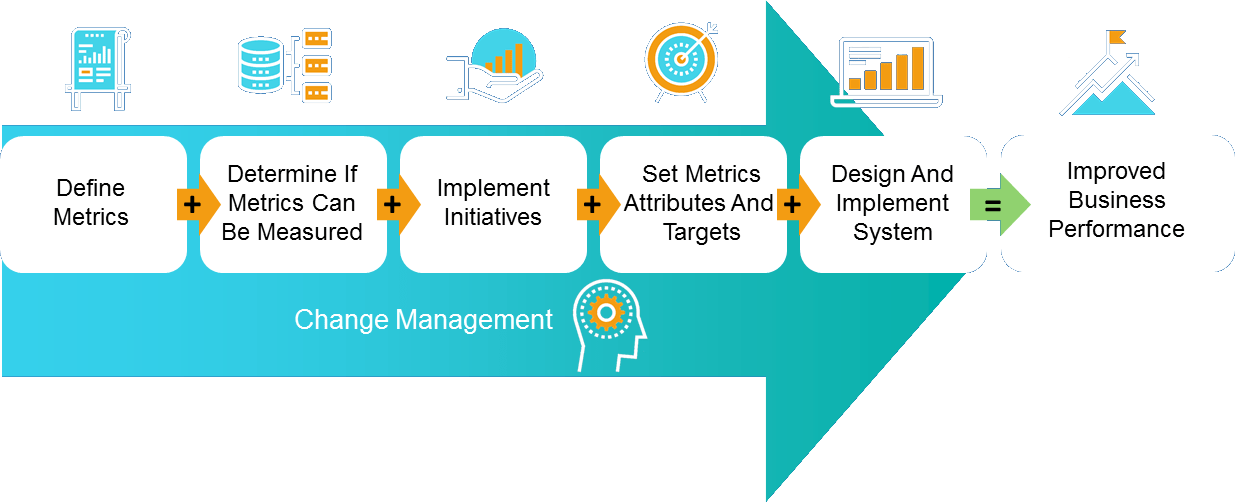
With these principles in mind, here’s a structured approach to selecting the right metrics for your management needs:
Step 1: Define Your Strategic Objectives and Goals
Start by clearly articulating "What are we trying to achieve?" Use frameworks like SMART goals (Specific, Measurable, Achievable, Relevant, Time-bound) to refine your objectives. For example:
- Objective: Increase market share in the EMEA region.
- Goal: Grow market share by 5% in EMEA within the next 12 months.
Step 2: Identify Key Performance Areas (KPAs)
Break down each objective into the critical areas of the business that must perform well to achieve that objective. For the market share example, KPAs might include:
- Sales Performance
- Product Development/Innovation
- Marketing Reach
- Customer Retention
Step 3: Brainstorm Potential Metrics for Each KPA
For each KPA, brainstorm a comprehensive list of potential metrics that could indicate performance. Don’t filter yet; just list everything that comes to mind.
- For Sales Performance: Number of new leads, conversion rate, average deal size, sales cycle length, revenue per sales rep, customer acquisition cost.
Step 4: Evaluate Against Core Principles
Now, rigorously filter your brainstormed list using the principles discussed earlier:
- Alignment: Does it directly contribute to the strategic goal?
- Actionability: Can we influence this metric?
- Leading/Lagging: Is it a good balance? Do we have both?
- Clarity/Specificity: Can it be clearly defined?
- Data Availability: Can we reliably get the data?
- Simplicity: Is it easy to understand?
Eliminate metrics that are irrelevant, un-actionable, too complex, or impossible to measure reliably.
Step 5: Select a Balanced Set of Key Performance Indicators (KPIs)
From your filtered list, choose the "vital few" – your Key Performance Indicators (KPIs). Aim for a balanced set that covers different aspects of performance. Consider frameworks like:
- Balanced Scorecard: Provides a holistic view by balancing financial, customer, internal process, and learning & growth perspectives.
- Objectives and Key Results (OKRs): Clearly links measurable key results to specific objectives, often with a mix of leading and lagging indicators.
Ensure you have a good mix of leading and lagging indicators to give you both predictive power and outcome validation.
Step 6: Define Data Collection, Reporting, and Ownership
For each chosen metric:
- Data Source: Where does the data come from? (CRM, ERP, web analytics, surveys, etc.)
- Collection Method: How will it be gathered? (Automated, manual entry, survey tool)
- Frequency: How often will it be measured and reported?
- Reporting Format: How will it be presented? (Dashboard, report, email)
- Owner: Who is responsible for tracking, reporting, and acting on this metric?
Step 7: Communicate and Train
Roll out your chosen metrics framework to the entire organization. Explain:
- What each metric means.
- Why it’s important (its link to strategy).
- How it’s measured.
- How individual and team actions impact the metrics.
- How the metrics will be used (for improvement, not just punishment).
Step 8: Review and Refine Regularly
Metrics are not static. The business environment, market conditions, and strategic priorities can change. Regularly (e.g., quarterly or annually) review your metrics to ensure they remain relevant, accurate, and impactful. Be prepared to adjust, add, or remove metrics as needed.
Common Pitfalls to Avoid
Even with a structured approach, managers can fall into common traps:
- Vanity Metrics: Focusing on metrics that look good but don’t provide actionable insights (e.g., high website traffic without conversion data).
- Measuring Everything: Creating a sprawling dashboard of hundreds of metrics that overwhelms users and obscures critical information.
- Focusing Only on Lagging Indicators: Relying solely on historical data means you’re always reacting, never proactively shaping the future.
- Lack of Alignment: Metrics that don’t clearly connect to strategic goals, leading to efforts that don’t move the business forward.
- Ignoring Context: Presenting numbers without the story behind them. A drop in sales might be concerning, or it might be a planned result of phasing out an old product line.
- Gaming the System: When metrics become targets for bonuses or performance reviews without considering the broader impact, people may find ways to "game" the numbers without delivering true value.
- Using Metrics for Punishment: If metrics are perceived solely as tools for disciplinary action, employees will fear reporting bad news, leading to distorted data.
- Poor Data Quality: Basing decisions on inaccurate, incomplete, or inconsistent data is worse than having no data at all.
The Role of Technology and Culture
While this article focuses on the choice of metrics, effective implementation relies heavily on two pillars:
- Technology: Modern business intelligence (BI) tools, data visualization software, and automated reporting platforms are invaluable for collecting, processing, and presenting metrics in an accessible and timely manner. They reduce manual effort and improve data accuracy.
- Culture: A data-driven culture is essential. This means fostering an environment where curiosity, questioning, learning from failure, and transparent communication around data are encouraged. It requires leadership to model data-informed decision-making and to create psychological safety around reporting metrics, both good and bad.
Conclusion
Choosing the right metrics for management is a continuous, iterative process, not a one-time task. It demands a deep understanding of strategic objectives, a disciplined approach to selection, and a commitment to using data not just to monitor, but to empower, enlighten, and evolve. By focusing on metrics that are aligned, actionable, balanced, and clearly defined, organizations can cut through the noise of data overload, gain true insights into their performance, and steer confidently towards their strategic aspirations. The right metrics transform data from a mere collection of numbers into a powerful engine for growth, innovation, and sustained success.
