

How to Stay Compliant Through Customs Changes: Navigating the Evolving Landscape of Global Trade
The intricate world of global trade is in constant flux. Geopolitical shifts, technological advancements, economic agreements, and security concerns regularly trigger updates and overhauls in customs regulations worldwide. For businesses engaged in international commerce, staying compliant is not merely a matter of good practice; it’s a critical imperative for operational continuity, financial stability, and reputational integrity. Failure to adapt to these changes can result in costly penalties, shipment delays, increased scrutiny, and even legal repercussions.
This article provides a comprehensive guide for businesses on how to proactively navigate and stay compliant through the ever-evolving landscape of customs changes, ensuring smooth and efficient cross-border operations.
The Dynamic Nature of Customs Regulations
Before delving into strategies, it’s crucial to understand why customs regulations change so frequently. These changes are rarely arbitrary; they are driven by a multitude of factors:
- Economic Policies: Governments use customs duties and trade policies to protect domestic industries, stimulate exports, or control imports.
- Trade Agreements: Bilateral or multilateral trade agreements (e.g., free trade agreements) necessitate adjustments to tariffs, rules of origin, and documentation.
- Security Concerns: Heightened global security threats lead to stricter screening processes, advanced data requirements, and new prohibitions.
- Technological Advancements: New technologies (e.g., blockchain, AI) prompt customs authorities to modernize their systems and data submission requirements.
- Environmental and Health Standards: Regulations related to product safety, environmental impact, or public health often dictate import/export restrictions or certifications.
- Geopolitical Shifts: Political tensions, sanctions, or new alliances can rapidly alter trade relationships and associated customs rules.
- Harmonized System (HS) Updates: The World Customs Organization (WCO) periodically updates the Harmonized System, requiring businesses to reclassify products.
Given this dynamic environment, a reactive approach to compliance is a recipe for disaster. A proactive, systematic strategy is essential.
Pillars of Proactive Customs Compliance
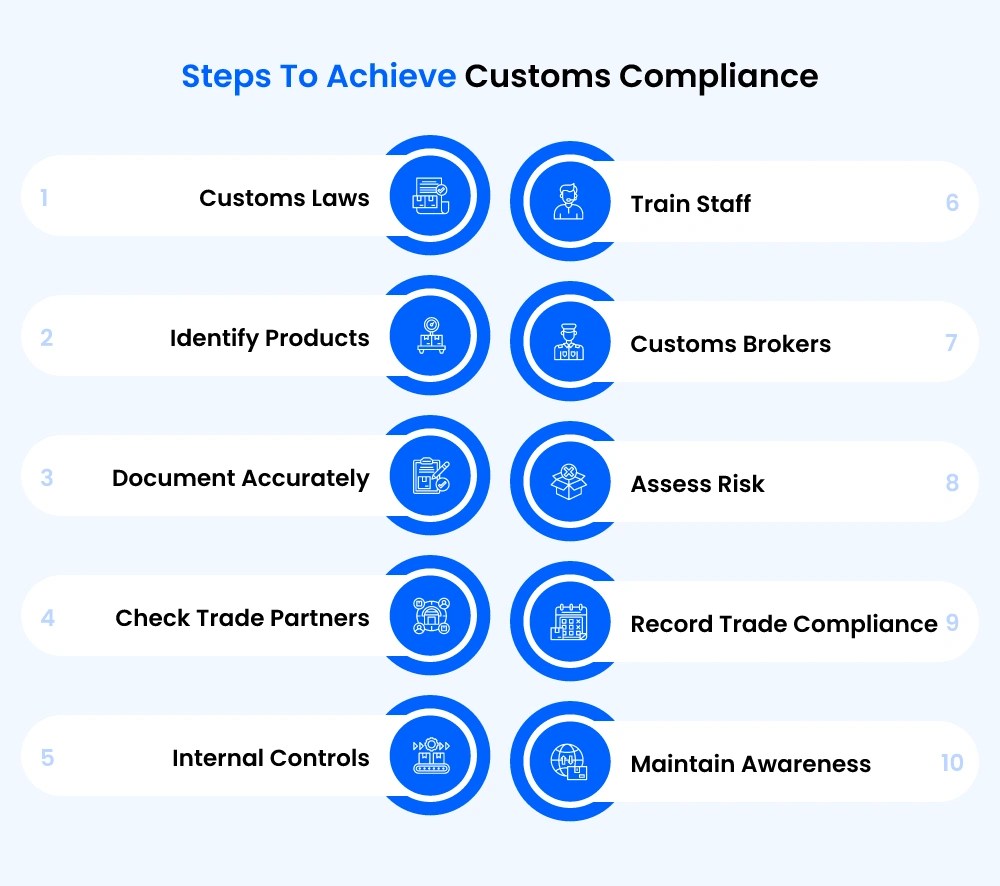
Staying compliant amidst change begins with establishing a robust, foundational compliance framework. These pillars serve as the bedrock for navigating any regulatory shift:
1. Robust Internal Compliance Framework
Every organization engaged in international trade needs a clearly defined internal compliance framework. This includes:
- Written Policies and Procedures: Documented guidelines for all customs-related activities, including product classification, valuation, origin determination, record-keeping, and export controls.
- Defined Roles and Responsibilities: Clearly assign who is responsible for monitoring changes, assessing impact, implementing updates, and training staff.
- Compliance Culture: Foster an organizational culture where compliance is understood and valued at all levels, from top management to frontline staff.
2. Continuous Monitoring and Intelligence Gathering
This is perhaps the most critical pillar for managing change. Businesses must actively seek out and interpret information about impending or enacted regulatory updates.
- Official Government Sources: Regularly check websites of relevant customs authorities (e.g., CBP in the US, HMRC in the UK, Bea Cukai in Indonesia), trade ministries, and national statistics agencies.
- International Organizations: Monitor updates from the World Customs Organization (WCO), World Trade Organization (WTO), and regional economic blocs (e.g., EU, ASEAN).
- Industry Associations and Trade Groups: These organizations often provide tailored summaries and interpretations of changes relevant to specific industries.
- Legal Counsel and Customs Brokers: Engage with specialized trade lawyers and experienced customs brokers. They are often among the first to be aware of changes and can provide expert analysis and guidance.
- Subscription Services: Invest in reputable trade intelligence platforms and news services that track customs and trade policy changes globally.
3. Comprehensive Training and Education
Even the best policies are ineffective if personnel are unaware or untrained.
- Regular Training Sessions: Conduct periodic training for all staff involved in the supply chain, including procurement, sales, logistics, finance, and legal departments.
- Update Training: Crucially, implement specific training modules whenever significant customs changes occur. This ensures that new procedures, documentation, or classification rules are understood and applied correctly.
- Role-Specific Training: Tailor training to the specific responsibilities of each team member (e.g., a classification specialist needs deeper training on HS code changes than a logistics coordinator).
4. Leveraging Technology
Manual processes are prone to error and struggle to keep pace with rapid changes. Technology is an indispensable tool for modern customs compliance.
- Global Trade Management (GTM) Software: Implement GTM systems that can automate tasks like product classification, duty calculation, trade document generation, and compliance checks. These systems are often updated by vendors to reflect regulatory changes.
- Data Analytics and AI: Utilize data analytics to identify trends, potential compliance risks, and areas for process improvement. AI can assist in predictive analysis for classification or risk assessment.
- Electronic Data Interchange (EDI): Ensure seamless and accurate data exchange with customs authorities and trade partners.
- Digital Record-Keeping: Maintain easily accessible and auditable digital records of all trade transactions and compliance activities.
5. Strong Partnerships
Collaboration is key in the complex world of international trade.
- Customs Brokers and Freight Forwarders: View these partners as extensions of your compliance team. Choose reputable partners with strong compliance programs and a track record of adapting to changes. Communicate openly and regularly with them.
- Legal and Trade Consultants: Retain expert legal counsel for complex compliance issues or for interpreting nuanced regulatory changes.
- Supply Chain Partners: Work closely with suppliers and customers to ensure they also adhere to necessary compliance standards, particularly concerning data provision and documentation.
6. Meticulous Record-Keeping
Proper documentation is the bedrock of demonstrating compliance.
- Comprehensive Archives: Maintain accurate records of all import/export transactions, including commercial invoices, packing lists, bills of lading, certificates of origin, licenses, permits, and customs declarations.
- Compliance Documentation: Keep records of internal policies, training materials, risk assessments, and audit reports.
- Retention Periods: Be aware of and adhere to the specific record retention periods mandated by different customs authorities, which can vary significantly.
Strategies for Navigating Specific Customs Changes
Beyond the foundational pillars, specific strategies are needed when a new customs regulation is announced or implemented.
1. Establish a Dedicated Change Management Team/Lead
When a significant change is imminent, designate a specific team or individual responsible for overseeing the transition. This centralizes efforts and ensures accountability. This team should:
- Act as a central point of contact: For all internal and external communication related to the change.
- Coordinate efforts: Across different departments (procurement, logistics, sales, IT, finance).
- Report to senior management: On progress and any challenges encountered.
2. Conduct Thorough Impact Assessments
Once a change is identified, the immediate next step is to assess its potential impact on your specific operations. This involves:
- Product Classification (HS Codes): Will new HS codes affect your products? Are there changes to tariff rates associated with these codes?
- Valuation: Are there new requirements for determining customs value, or changes to how certain costs (e.g., royalties, assists) are treated?
- Rules of Origin: Have the criteria for claiming preferential origin changed under new trade agreements? This is critical for duty savings.
- Documentation Requirements: Are new forms, certificates, or data elements required for declarations? Are existing documents no longer valid?
- Licensing and Permits: Are new licenses or permits needed for certain goods, or are existing ones subject to new conditions?
- Duty and Tax Implications: How will the change affect the duties, taxes, and fees you pay or collect?
- Operational Processes: Will the change necessitate alterations to your shipping, warehousing, or internal review processes?
- IT System Updates: Will your internal systems or GTM software need configuration changes to handle new data fields or logic?
3. Develop a Communication Strategy
Effective communication is paramount both internally and externally.
- Internal Communication: Clearly articulate the changes, their impact, and new procedures to all affected departments. Use multiple channels (memos, meetings, internal portals).
- External Communication: Inform your customs brokers, freight forwarders, suppliers, and even key customers about impending changes that might affect them or your ability to fulfill orders. Transparency builds trust.
4. Implement Change Management Protocols
Treat customs changes like any other major business project.
- Phased Implementation: If possible, implement changes in phases to allow for testing and adjustments.
- Pilot Programs: Test new processes or system configurations on a small scale before a full rollout.
- Standard Operating Procedure (SOP) Updates: Revise all relevant SOPs to reflect the new requirements.
- System Configuration: Ensure all relevant IT systems (ERP, GTM) are updated and tested to handle new data, calculations, or reporting.
5. Scenario Planning and Contingency Measures
Despite best efforts, unforeseen issues can arise during a transition.
- Risk Assessment: Identify potential bottlenecks, delays, or errors that could occur due to the change.
- Contingency Plans: Develop backup plans for critical processes. What if a new system fails? What if documentation is rejected? Having a plan B minimizes disruption.
- Buffer Time: Build in extra time for customs clearance during periods of significant change.
6. Post-Implementation Review and Adjustment
Once the changes are live, the work isn’t over.
- Performance Monitoring: Track key metrics such as clearance times, compliance rates, and any penalties incurred.
- Feedback Loop: Collect feedback from staff and partners on the effectiveness of new processes and systems.
- Continuous Improvement: Be prepared to make further adjustments and refinements based on real-world experience.
Common Pitfalls to Avoid
- Complacency: Believing that past compliance is sufficient for future challenges.
- Underestimating Resources: Not allocating enough time, budget, or personnel to manage changes.
- Siloed Information: Lack of communication and coordination between different departments.
- Ignoring Technology: Relying solely on manual processes in a rapidly digitizing environment.
- Procrastination: Delaying preparation until the last minute, leading to rushed and error-prone implementation.
The Undeniable Benefits of Proactive Compliance
While the effort required to stay compliant through customs changes might seem daunting, the benefits far outweigh the challenges:
- Reduced Risks and Penalties: Minimizing fines, seizures, and increased inspections.
- Faster Customs Clearance: Ensuring smooth and predictable movement of goods across borders.
- Enhanced Reputation and Trust: Building credibility with customs authorities and trade partners.
- Cost Savings: Avoiding unnecessary duties, demurrage charges, and administrative overheads.
- Competitive Advantage: Operating with greater efficiency and predictability than less compliant competitors.
- Better Supply Chain Resilience: A robust compliance framework makes your supply chain more adaptable to disruptions.
Conclusion
Staying compliant through customs changes is not a one-time project but an ongoing commitment. In an increasingly interconnected and dynamic global economy, businesses must adopt a proactive, systematic, and technologically-driven approach to customs compliance. By investing in robust internal frameworks, continuous monitoring, comprehensive training, strategic partnerships, and agile change management processes, companies can not only mitigate risks but also transform compliance into a strategic asset, fostering efficiency, trust, and sustained growth in the global marketplace. The key is to view customs compliance not as a burden, but as an integral part of successful international trade operations.
